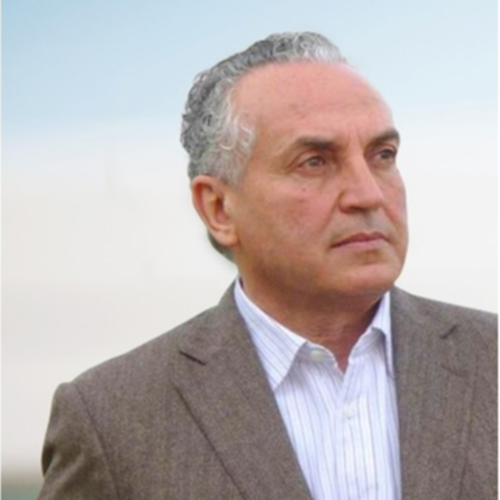
The resignation of the Governor of the Central Bank of Libya, Naji Issa, submitted to the Speaker of the House of Representatives on 9 August 2026, has reopened one of the most sensitive questions facing the Libyan economy: is the problem fundamentally one of monetary-policy management, or has the Central Bank reached the point where it can no longer contain imbalances originating primarily in public finances, energy subsidies, and the way oil revenues are managed?
The resignation letter itself does not state the reasons. It simply apologises for being unable to continue serving as Governor, “without stating the reasons.” It would therefore be professionally inappropriate to claim that any single economic file was the direct cause of the resignation.
However, the developments that preceded it, the correspondence surrounding the dispute over (the US-mediated) Unified Public Spending (agreement), the Governor’s public positions, and the warnings issued by the International Monetary Fund all reveal two intertwined economic conflicts that help explain why the Governor’s task had become increasingly difficult.
In that sense, the resignation may be less about a personal disagreement and more about a broader reality: Libya’s current model of economic management may be approaching the limits of its sustainability.
The First Conflict: Who Controls Spending — and Who Finances What the State Can No Longer Afford?
The first problem is fiscal before it is monetary. Libya earns most of its public revenues from oil and gas, meaning in foreign currency, while most government expenditure is made in Libyan dinars. This places the Central Bank at the unavoidable intersection between the two: oil generates dollars, while the Central Bank converts those dollars into dinars that the government can spend.
In April 2026, an agreement was announced on Unified Public Spending of approximately LYD 190 billion, including around LYD 73 billion for salaries, LYD 37 billion for subsidies, LYD 40 billion for development, LYD 18 billion for family allowances, LYD 10 billion for operating expenditure, and an additional LYD 12 billion for the National Oil Corporation. But the agreement did not end the dispute.
In June, the Chairman of the House of Representatives’ Unified Spending Committee sent a letter to the Governor warning that the House might consider itself released from the commitments associated with the agreement if what it described as obstruction of implementation continued.
This reveals the nature of the first conflict. The political authorities view the Central Bank as the institution that must provide the financing, while the Central Bank sees itself as the institution that must prevent public spending from turning into a permanent drain on foreign currency and reserves.
Government spending does not end when a cheque is issued in dinars. In an economy that imports most of what it consumes, a significant share of those dinars eventually returns to the Central Bank as demand for foreign currency. Every additional billion dinars spent by the state is therefore not merely an accounting entry in the Treasury’s books. It can translate into additional demand for imported goods and dollars.
This is precisely the concern repeatedly raised by the IMF: persistently high public expenditure increases pressure on the exchange rate and foreign reserves and, if continued without adjustment, becomes unsustainable.
The question, therefore, is not simply: “Does the Central Bank have dollars?” The more important question is: How many dollars can it sell every year without beginning to finance a level of public spending and consumption that continuously exceeds the economy’s capacity to generate resources?
Fuel and Energy Subsidies: The Hole Connecting the Fiscal Crisis to the Dollar Crisis - Fuel lies at the heart of this dispute.
The Libyan state does not subsidize petrol, diesel and electricity only in dinars. A very large part of the subsidy is effectively paid in dollars through the importation of fuel or through the domestic consumption of products that could otherwise have been exported and monetized.
The cost of fuel subsidies therefore has two dimensions: a fiscal cost, reflected in public spending and subsidies; and an external cost, reflected in the depletion of foreign currency. The wider the gap between the near-free domestic price of energy and its true economic cost, the stronger the incentive for smuggling, diversion and resale outside official channels.
This is why fuel reform is not merely a decision about the price of a litre of petrol. It is simultaneously a decision about: the dollar, foreign reserves, public expenditure, smuggling and the exchange rate.
The dilemma confronting the Central Bank can be described in simple terms. The state sells oil and receives dollars. It then uses a substantial part of those dollars to import fuel, which is sold domestically at prices far below its real cost. Part of that fuel may then leak into smuggling networks. At the same time, the Treasury requires ever more dinars to finance salaries, subsidies and other public expenditure. In effect, the state can find itself selling energy for dollars, buying energy back for dollars, and simultaneously creating the dinar counterpart needed to finance the rest of public expenditure. That is a cycle that monetary policy alone cannot close.
The Second Conflict: Do We Defend the Official Exchange Rate — or Defend the Reserves?
The second conflict is monetary, but in reality, it is largely the consequence of the first. The question is straightforward: What should the Central Bank do when the volume of dinars chasing foreign currency becomes larger than the amount of foreign currency it can sustainably supply?
Its options are limited. It can draw down reserves, restrict access to foreign currency, tolerate an expanding parallel market, adjust the exchange rate, or push for lower public spending. Each option carries political and social costs. This is where the dispute over the exchange rate becomes critical.
One school of thought argues that the value of the dinar should be anchored primarily to indicators such as the money supply, net foreign assets and reserves, and that the Central Bank should use its tools to defend a stable rate rather than allow a speculative parallel market to become the benchmark. This position has a legitimate economic basis.
The alternative view is that any exchange rate at which the Central Bank cannot sustainably satisfy legitimate foreign-currency demand without increasingly severe restrictions or depletion of reserves cannot be regarded as a sustainable equilibrium rate, regardless of its accounting justification. That position also has a legitimate economic basis.
The disagreement, therefore, is not between those who believe in economic science and those who believe in the black market. The real question is: Should priority be given to defending a particular exchange-rate number, or to defending the state’s ability to finance and sustain that exchange rate over time?
The Exchange-Rate Gap Is Not Only a Result of the Crisis — It Can Begin to Reproduce the Crisis
When the official dollar becomes significantly cheaper than the price the wider market is willing to pay, behaviour changes. Access to the official dollar becomes an asset in itself. Two types of demand then emerge.
The first is genuine demand for imports, travel, medical treatment, education and other legitimate purposes.
The second is demand for dollars simply because obtaining them at the official rate creates an immediate profit opportunity through resale or revaluation at another rate. At that point, the exchange-rate gap shifts from being merely a consequence of the imbalance to becoming an additional cause of it.
Central Bank data illustrate the sheer scale of Libya’s foreign-exchange market. Foreign-currency usage by commercial banks during the first five months of 2026 amounted to approximately USD 12.9 billion. Managing the exchange rate in Libya is therefore not a narrow technical matter concerning the dollar price. It is effectively the management and allocation of tens of billions of dollars each year. Anyone who obtains dollars at a materially cheaper official rate receives, in economic terms, a form of rent for as long as a substantial price gap exists.
Where Fuel Subsidies and the Exchange Rate Meet
This is perhaps the most important point in the entire crisis. Fuel subsidies and the exchange rate are not separate files. When the state spends billions of dollars financing cheap fuel, fewer dollars remain available to finance the rest of the economy. When foreign-currency availability falls while dinar expenditure continues rising, pressure on the exchange rate increases. When the gap between the official and parallel rates widens, speculative demand for the dollar rises. The Central Bank then needs to inject additional foreign currency in an attempt to stabilize the market. And the cycle begins again.
The sequence can be summarized as follows: High public expenditure → more dinars → greater demand for imports and dollars → large fuel imports and subsidies → lower net foreign-currency resources → pressure on the exchange rate → widening exchange-rate gap and speculation → higher dollar demand → greater depletion of reserves.
This is the cycle that no Central Bank Governor can break alone.
The Real Conflict: Who Bears the Cost of Adjustment?
At this point, the economic meaning of the resignation becomes clearer. An economy that reaches this stage cannot avoid adjustment. It can only decide who bears its cost. If the fiscal authorities refuse to reduce spending, the adjustment shifts to the exchange rate. If the authorities refuse to adjust the exchange rate, the cost shifts to the foreign reserves. If both are resisted, restrictions, shortages and the parallel market emerge. If fuel subsidies continue without reform, the Treasury and the reserves continue to bear the cost of both consumption and smuggling. And if the money supply is sharply contracted simply to defend the dinar, the real economy may bear the cost through weaker liquidity, credit, demand, investment and employment.
There is, therefore, no cost-free option. The real question is whether the cost of reform is distributed consciously and fairly, or whether it is allowed to distribute itself chaotically through inflation, currency depreciation and reserve depletion.
Why Might the Position of Governor Become Unsustainable?
From this perspective, the resignation of Naji Issa — while reiterating that his letter does not disclose the reasons — can be interpreted as a sign of a deeper institutional dilemma.
The Central Bank is effectively being asked to do all of the following at the same time: finance very high public expenditure; preserve the value of the dinar; provide foreign currency for trade; finance a heavy fuel bill; protect foreign reserves; eliminate the parallel market; and avoid devaluing the currency.
Economically, these objectives cannot all be achieved simultaneously if the underlying fiscal position does not change. The real crisis, therefore, is not about choosing a Governor who is more hawkish or more accommodating. It is about a basic consistency problem: the authorities cannot indefinitely fix all variables while the underlying fundamentals move in the opposite direction.
Resignation — or an Economic Message?
If it is later established that the resignation was indeed connected to disagreements over public spending and economic management, its significance will extend far beyond a change of leadership at the Central Bank. It would mean that Libya has reached a point where monetary policy can no longer be expected to conceal the consequences of fiscal policy.
The Central Bank can manage an imbalance. It cannot abolish it. It cannot create more oil, eliminate the cost of fuel, force reserves to grow, or permanently maintain the value of the dinar if dinar expenditure expands faster than the economy’s ability to generate foreign currency. This is where the two conflicts at the heart of the current debate converge.
The first is fiscal: Should reform begin with controlling public expenditure, restructuring fuel subsidies and improving the management of oil revenues, or should spending continue while the Central Bank is expected to provide the financing?
The second is monetary: If fiscal reform does not happen, should the consequences be absorbed through the depletion of reserves and defence of an administrative exchange rate, or should the exchange rate be adjusted, the gap narrowed and the rent created by preferential access to foreign currency reduced?
These are not truly separate conflicts. They are two sides of the same question: Who will pay the difference between what Libya earns from oil and what Libya actually spends? Either the state pays through reforming expenditure and subsidies, or the reserves pay, or the dinar pays, or the citizen pays through inflation and loss of purchasing power. No Central Bank Governor, regardless of who holds the position, can abolish that equation.
Conclusion
The greatest mistake may therefore be to interpret the Governor’s resignation as merely a crisis within the Central Bank of Libya. Economically, it is more accurately understood as exposing a crisis in Libya’s model of public financial management: a state that earns primarily in dollars, spends primarily in dinars, consumes a significant share of its foreign-currency resources through a heavily subsidized and leakage-prone energy system, and then asks the Central Bank simultaneously to preserve reserves and maintain a low and stable exchange rate.
This equation cannot be solved by changing the Governor. It can only be solved by changing the equation itself. And this is where the central message of the recent economic debate acquires its full meaning: Politics may postpone reform, but it cannot cancel the bill. If public finances do not pay that bill today, tomorrow it will be paid by the reserves, the dinar, or the citizen.
Central Bank of Libya Governor Naji Issa Tenders Resignation
High State Council directs Naji Issa to remain as CBL Governor
